
High Protein Diet Plan for Muscle Gain (With Easy Meal Chart)
Introduction
Building muscle isn’t just about lifting heavier weights—it starts with what you eat every day. A well-balanced high protein diet for muscle gain provides the nutrients your body needs to repair muscles and support long-term strength. Following a high protein diet plan for muscle gain helps your body repair muscle fibers after workouts, supports lean muscle growth, and improves recovery.
This guide has been updated with the latest evidence-based nutrition recommendations and current research in sports nutrition.
Protein is often called the building block of muscles because it provides the amino acids your body needs to rebuild stronger muscles after exercise. However, simply eating more protein isn’t enough. Choosing the right foods, eating enough calories, and spreading your protein intake throughout the day are equally important.
In this guide, you’ll learn:
- How much protein you really need
- The best protein-rich foods for muscle growth
- A simple muscle gain meal plan
- Common mistakes to avoid
- Practical tips backed by nutrition science
Whether you’re a beginner or an experienced gym-goer, this guide will help you create a sustainable diet that supports healthy muscle gain.
Table of Contents
- Why Is a High Protein Diet Important for Muscle Gain?
- Benefits of a High Protein Diet
- Who Should Follow This Diet?
- Daily Protein Intake for Muscle Gain
- Protein Intake Calculator
- Best High Protein Foods for Muscle Gain
- Animal-Based Protein Sources
- Plant-Based Protein Sources
- Easy High Protein Meal Plan for Muscle Gain
- Best Carbohydrates for Muscle Gain
- Healthy Fats Matter Too
- Tips to Maximize Muscle Gain
- Common Mistakes to Avoid
- Do You Need Protein Powder?
- Frequently Asked Questions
- Conclusion
- References
Why Is a High Protein Diet Important for Muscle Gain?
Every workout creates tiny tears in your muscle fibers. While this sounds concerning, it’s actually a normal part of building muscle. During recovery, your body repairs these fibers and makes them stronger than before. This process is known as muscle protein synthesis.
Without enough protein, your muscles cannot recover efficiently, making it harder to gain strength and lean muscle mass.
A balanced high protein diet for muscle gain helps:
- Repair damaged muscle tissue
- Increase lean muscle mass
- Improve workout recovery
- Reduce muscle soreness
- Preserve muscle during fat loss
- Support long-term strength gains
Protein works best when combined with resistance training, adequate sleep, and a balanced intake of carbohydrates and healthy fats.
Benefits of a High Protein Diet
Eating enough protein offers more than just bigger muscles. It also supports your overall health and fitness goals.
Supports Lean Muscle Growth
Protein supplies essential amino acids that help build new muscle tissue after exercise.
Speeds Up Recovery
A protein-rich meal after training can help reduce muscle soreness and prepare your body for the next workout.
Keeps You Feeling Full
Protein is highly satisfying, which may reduce unnecessary snacking and help maintain a healthy body composition.
Helps Maintain Muscle While Losing Fat
If you’re trying to lose fat without losing muscle, increasing your protein intake is especially important.
Supports Metabolism
Digesting protein requires slightly more energy than digesting carbohydrates or fats, contributing modestly to daily calorie expenditure.
Who Should Follow This Diet?
A high-protein diet for muscle gain may be suitable for:
- Beginners starting a strength training program
- Individuals aiming to build lean muscle mass
- Athletes and recreational gym-goers
- People recovering from intense resistance training
- Vegetarians and vegans who carefully plan their protein intake
However, individuals with kidney disease or certain medical conditions should consult a healthcare professional or registered dietitian before making significant dietary changes.
Daily Protein Intake for Muscle Gain
One of the most common questions is, “How much protein should I eat to build muscle?”
For most healthy adults who perform regular strength training, research suggests consuming:
1.6–2.2 grams of protein per kilogram of body weight per day
This range supports muscle growth for most individuals.
Protein Intake Calculator
Use the table below to estimate your recommended daily protein intake based on your body weight.
| Body Weight | Daily Protein Target |
|---|---|
| 50 kg | 80–110 g |
| 60 kg | 96–132 g |
| 70 kg | 112–154 g |
| 80 kg | 128–176 g |
| 90 kg | 144–198 g |
| 100 kg | 160–220 g |
Instead of eating all your protein in one meal, spread it across 4–5 meals throughout the day to support muscle protein synthesis.
Tip: If you have kidney disease or another medical condition, consult a qualified registered dietitian or healthcare professional before significantly increasing your protein intake.
Best High Protein Foods for Muscle Gain
Choosing nutrient-dense protein sources is just as important as meeting your daily protein target.
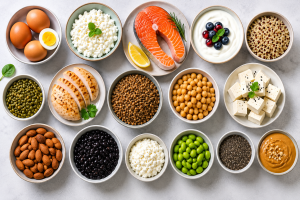
Animal-Based Protein Sources
These foods contain complete proteins with all nine essential amino acids.
| Food | Protein (Approx.) |
|---|---|
| Chicken Breast (100g) | 31g |
| Salmon (100g) | 22g |
| Tuna (100g) | 25g |
| Eggs (1 large) | 6g |
| Greek Yogurt (170g) | 17g |
| Lean Beef (100g) | 26g |
| Cottage Cheese (100g) | 11g |
Animal proteins are naturally rich in leucine, an essential amino acid that plays a key role in muscle protein synthesis and muscle recovery.
Best Plant-Based Protein Sources
Plant-based diets can also support muscle growth when protein intake is adequate.
| Food | Protein (Approx.) |
|---|---|
| Lentils (1 cup cooked) | 18g |
| Chickpeas (1 cup cooked) | 15g |
| Tofu (100g) | 8g |
| Tempeh (100g) | 19g |
| Quinoa (1 cup cooked) | 8g |
| Almonds (30g) | 6g |
| Pumpkin Seeds (30g) | 9g |
For vegetarians and vegans, combining different plant protein sources throughout the day helps provide a balanced amino acid profile.
Easy High Protein Meal Plan for Muscle Gain
The following sample meal plan provides a balanced mix of protein, complex carbohydrates, and healthy fats to support muscle growth and recovery. Adjust portion sizes based on your calorie needs and activity level.
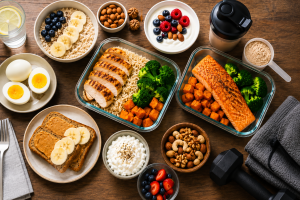
| Meal | Foods | Approx. Protein |
|---|---|---|
| Breakfast | 3 eggs, 1 cup oatmeal, 1 banana | 28g |
| Morning Snack | Greek yogurt with berries and almonds | 20g |
| Lunch | Grilled chicken breast, brown rice, mixed vegetables | 40g |
| Pre-Workout Snack | Whole-grain toast with peanut butter | 12g |
| Post-Workout | Whey protein shake with a banana (optional) | 25g |
| Dinner | Grilled salmon, sweet potato, broccoli | 35g |
| Before Bed | Cottage cheese or milk | 15g |
Estimated Daily Protein: 175g
Tip: If you don’t use protein powder, you can easily meet your protein needs with whole foods like eggs, Greek yogurt, cottage cheese, tofu, chicken, fish, or lentils.
Note: This sample meal plan is intended for educational purposes. Adjust portion sizes and total calories based on your age, body weight, activity level, and health and fitness goals.
Best Carbohydrates for Muscle Gain
Protein builds muscle, but carbohydrates provide the energy needed for effective workouts and recovery.
Choose nutrient-rich carbohydrate sources such as:
- Brown rice
- Oats
- Sweet potatoes
- Whole-grain bread
- Quinoa
- Fruits
- Vegetables
Complex carbohydrates help replenish glycogen stores after training and support overall performance.
Healthy Fats Matter Too
Healthy fats play an important role in hormone production, including hormones involved in muscle growth.
Good sources include:
- Avocados
- Almonds
- Walnuts
- Chia seeds
- Flaxseeds
- Olive oil
- Natural peanut butter
Aim to include healthy fats in moderation as part of a balanced diet.
Tips to Maximize Muscle Gain
A great meal plan works best when combined with healthy habits.

1. Eat Enough Calories
Building muscle requires a small calorie surplus. If you’re not eating enough overall, muscle growth may slow down even if your protein intake is high.
2. Spread Protein Throughout the Day
Instead of eating most of your protein at dinner, divide it across 4–5 meals to support muscle protein synthesis.
3. Prioritize Strength Training
Focus on compound exercises such as squats, deadlifts, bench press, rows, and overhead press while gradually increasing the weight over time.
4. Stay Hydrated
Water supports digestion, exercise performance, and recovery. Drink enough fluids throughout the day, especially around workouts.
5. Get Quality Sleep
Muscle recovery happens primarily during sleep. Aim for 7–9 hours of quality sleep each night.
Common Mistakes to Avoid
Many people eat more protein but still struggle to gain muscle because of these common mistakes.
Skipping Meals
Missing meals can make it difficult to reach your daily calorie and protein goals.
Eating Too Little Overall
Protein alone isn’t enough. Without adequate calories, your body has fewer resources to build new muscle tissue.
Ignoring Strength Training
Nutrition supports muscle growth, but progressive resistance training provides the stimulus your muscles need.
Relying Only on Supplements
Protein powder is a supplement—not a replacement for a balanced diet. Whole foods should make up the majority of your protein intake.
Not Being Consistent
Visible muscle growth takes time. Consistency with nutrition, training, and recovery is more important than quick fixes.
Do You Need Protein Powder?
Not necessarily.
Most people can meet their protein needs through whole foods such as:
- Chicken
- Fish
- Eggs
- Greek yogurt
- Cottage cheese
- Lentils
- Beans
- Tofu
Protein powder can be a convenient option if you struggle to meet your daily protein goal, but it is not required for building muscle.
Frequently Asked Questions
Is a high protein diet safe?
For most healthy adults, a high-protein diet is generally considered safe when consumed as part of a balanced eating pattern. If you have kidney disease or another medical condition, speak with a healthcare professional before making major dietary changes.
How much protein do I need to build muscle?
Most people who perform regular resistance training benefit from 1.6–2.2 grams of protein per kilogram of body weight per day.
Can I build muscle without protein powder?
Yes. Whole foods such as eggs, chicken, fish, dairy products, legumes, and tofu can provide enough protein for muscle growth.
Which protein source is best for muscle gain?
Lean chicken, fish, eggs, Greek yogurt, lean beef, tofu, and lentils are all excellent choices. The best option depends on your dietary preferences and overall nutrition plan.
Should I eat protein before or after a workout?
Both can be beneficial. The most important factor is meeting your total daily protein requirement consistently.
Can vegetarians build muscle on a high-protein diet?
Yes. Combining protein-rich plant foods such as lentils, beans, tofu, tempeh, quinoa, and nuts can support muscle growth when total protein intake is adequate.
What is the best breakfast for muscle gain?
A high-protein breakfast can support muscle recovery and help you meet your daily protein goals. Good options include eggs, Greek yogurt, oatmeal with whey protein, cottage cheese, and high-protein smoothies.
How many meals should I eat for muscle gain?
Most people benefit from eating 4–5 balanced meals throughout the day. Spreading your protein intake evenly helps support muscle protein synthesis and recovery better than consuming most of your protein in one meal.
How long does it take to build muscle with a high-protein diet?
Most beginners may notice improvements in strength within a few weeks, while visible muscle growth typically takes 8–12 weeks. To stay consistent with your workouts and nutrition, follow a structured 12-Week Body Transformation Plan designed for sustainable muscle growth.
Conclusion
Following a high protein diet plan for muscle gain is one of the most effective ways to support strength, recovery, and lean muscle development. While protein is essential, lasting results also depend on consistent resistance training, adequate calories, quality sleep, and balanced nutrition.
Choose nutrient-dense protein sources, spread your intake throughout the day, and stay consistent with your training plan. Over time, these habits can help you build muscle in a healthy and sustainable way.
Have questions about building muscle or meeting your daily protein needs? Leave a comment below and share your experience. If you found this guide helpful, explore our other evidence-based fitness and nutrition articles for more muscle-building tips.
Medical Disclaimer: This article is for educational purposes only and should not be considered medical advice. Consult a qualified healthcare professional or registered dietitian before making significant changes to your diet or exercise routine, especially if you have an underlying medical condition.
References
- International Society of Sports Nutrition (ISSN). Position Stand: Protein and Exercise.
- Harvard T.H. Chan School of Public Health. The Nutrition Source: Protein.
- National Institutes of Health (NIH). Office of Dietary Supplements.
- American College of Sports Medicine (ACSM). Nutrition and Athletic Performance.
- Academy of Nutrition and Dietetics. Nutrition and Athletic Performance Position Paper.
- Dietary Guidelines for Americans (USDA & HHS) Dietary Guidelines for Americans 2025–2030.
